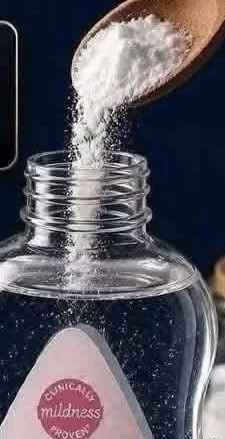
The idea of mixing baby oil with baking soda to make the skin look younger has become popular in online beauty posts. Some viral claims suggest that applying a small amount of this mixture every night can dramatically reduce wrinkles or make someone look decades younger. While baby oil and baking soda are inexpensive household products, there is no good evidence that this combination can remove wrinkles or make a person look 25 years younger.
Understanding what these ingredients actually do can help you avoid unrealistic skincare promises and choose gentler options for healthy-looking skin.
What Is Baby Oil?
Baby oil is generally a mineral-oil-based product designed to help reduce moisture loss from the skin. Mineral oil works as an occlusive ingredient, meaning it forms a layer on the skin that can help keep moisture from escaping.
When skin is properly moisturized, it may temporarily appear softer, smoother, and more supple. Fine lines caused partly by dryness can also look less noticeable. However, this does not mean that baby oil reverses skin aging or removes established wrinkles.
Baby oil can be useful as a simple moisturizer for some people, particularly on areas of dry skin. It is usually best applied to slightly damp skin so that it can help lock in existing moisture.
What Does Baking Soda Do to the Skin?
Baking soda, also called sodium bicarbonate, is an alkaline substance. It is sometimes used in homemade beauty recipes because its fine texture can act as a physical exfoliant.
However, facial skin has a naturally acidic environment, commonly referred to as the skin’s acid mantle. Applying alkaline substances such as baking soda can interfere with this environment and may cause dryness, irritation, redness, or discomfort, especially when used frequently.
For this reason, baking soda is not generally considered a first-choice ingredient for an anti-aging skincare routine.
Does Baby Oil and Baking Soda Remove Wrinkles?
There is no reliable evidence that mixing baby oil with baking soda removes wrinkles, tightens mature skin, or produces dramatic age-reversing results.
Baby oil can moisturize and temporarily improve the appearance of dry skin, while baking soda may provide superficial exfoliation. Neither ingredient has been shown to rebuild collagen or significantly reverse the biological processes responsible for wrinkles.
Claims such as looking 20 or 25 years younger after using the mixture for a few weeks should therefore be treated with caution.
Why Can Homemade Mixtures Be Problematic?
A homemade skincare recipe may appear simple, but the skin is sensitive to changes in pH, friction, and ingredient concentration. Using baking soda repeatedly can potentially make the skin feel dry or irritated.
Physical exfoliation can also become too aggressive when a product is rubbed into the skin. Over-exfoliation may leave the skin uncomfortable and more sensitive.
Another important consideration is that everyone’s skin is different. A mixture that does not bother one person may cause irritation in another.
If you are considering a new skincare ingredient, applying a small amount to a limited area first can help you determine whether your skin reacts negatively. Avoid using products on broken, irritated, or sunburned skin.
Better Ingredients for a Simple Anti-Aging Routine
If your goal is smoother and healthier-looking skin, a consistent skincare routine is generally more useful than a viral DIY mixture.
Moisturizer can help maintain the skin barrier and reduce the appearance of dryness. Look for a gentle moisturizer appropriate for your skin type.
Sunscreen is particularly important. Regular exposure to ultraviolet radiation contributes significantly to premature skin aging. Using broad-spectrum sunscreen during the day can help protect the skin from further sun-related damage.
Retinoids are another well-established category of ingredients used in dermatology for signs of photoaging. Because these products can cause irritation and are not appropriate for everyone, it is wise to discuss their use with a qualified healthcare professional.
Other skincare ingredients, such as vitamin C, niacinamide, and hyaluronic acid, may also be included in products designed to support brighter, hydrated, and smoother-looking skin.
Can Baby Oil Still Be Used?
For people who tolerate mineral oil well, baby oil can be a useful product for reducing moisture loss. It can leave the skin feeling soft and smooth, but it should not be viewed as a wrinkle-removing treatment.
If you enjoy using baby oil, consider using it by itself rather than combining it with baking soda. Applying a small amount to damp skin after bathing can help seal in moisture.
It is also important to check the product label because baby oils can vary. Some contain fragrance, which may irritate people with sensitive skin.
Natural Does Not Always Mean Better
One reason DIY skincare recipes become popular is the belief that natural or household ingredients are automatically safer. That is not necessarily true.
The skin is a living protective barrier, and ingredients should be selected based on how they interact with that barrier. Professional skincare products are often formulated with specific concentrations and pH levels for their intended use.
A simple routine using gentle cleansing, moisturizing, and sun protection can be more sensible than repeatedly experimenting with kitchen ingredients.
Final Thoughts
The viral claim that baby oil and baking soda can make mature skin look 25 years younger is not supported by reliable evidence. Baby oil may help moisturize the skin and temporarily improve its appearance, but baking soda does not have proven anti-aging benefits and may cause irritation when used on the face.
For healthier-looking skin, focus on gentle skincare, regular moisturization, sun protection, adequate sleep, balanced nutrition, and consistency. If you have persistent skin concerns, a dermatologist or other qualified healthcare professional can recommend products suited to your individual skin type.
The best skincare approach is not necessarily the most complicated one. Simple, gentle, evidence-based habits are usually a better choice than dramatic promises from viral beauty recipes.