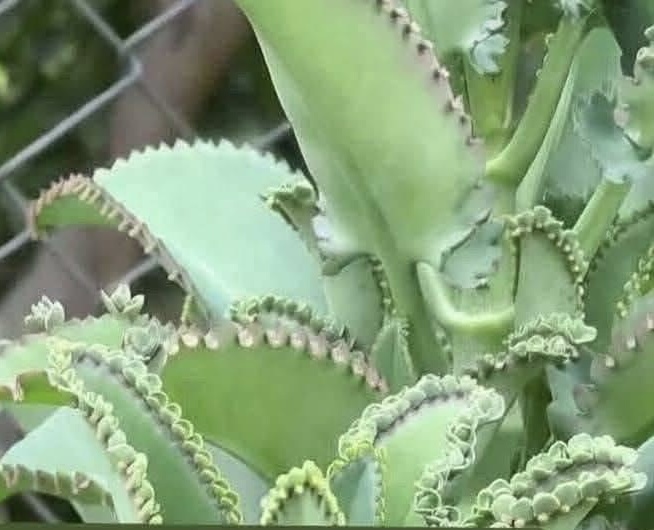
Claims about a “miracle leaf” that can destroy cancer and that doctors supposedly do not want people to know about are widely shared online. The plant shown in such posts is often Kalanchoe pinnata, also known as Bryophyllum pinnatum or the “mother of thousands.” Although this plant has a long history of traditional use, the claim that its leaves can cure or destroy cancer is not supported by clinical evidence.
What Is Kalanchoe Pinnata?
Kalanchoe pinnata is a succulent plant found in many tropical and subtropical regions. It is recognizable by its thick, fleshy leaves that can develop tiny plantlets along their edges. Traditional medicine has used different parts of Kalanchoe plants for various purposes, including inflammatory conditions and other health complaints.
Modern researchers have become interested in the plant because its leaves contain numerous naturally occurring compounds, including flavonoids, phenolic compounds, and other phytochemicals. Some of these substances have demonstrated biological activity in laboratory research.
However, laboratory activity is very different from proving that a plant can treat cancer in people.
What Does Cancer Research Actually Show?
Some scientific studies have investigated Kalanchoe pinnata extracts against cancer cells grown in laboratories. A 2024 study examined an ethanolic leaf extract against several human cancer cell lines, including breast, prostate, and colon cancer models. The researchers observed inhibition of cell proliferation and changes associated with programmed cell death, particularly in some cancer cell lines.
These findings are interesting because they suggest that certain compounds in the plant may deserve further investigation. Nevertheless, experiments performed on isolated cells cannot establish that eating or drinking the plant will produce the same effect in a human body.
Other research has also reported activity involving breast cancer cell models and molecular pathways associated with cancer-cell migration and proliferation. Recent studies continue to investigate how Kalanchoe compounds may influence cellular processes.
This means Kalanchoe pinnata may be a subject of early-stage cancer research, but it should not be described as a proven cancer treatment.
Why “Destroys Cancer” Is Misleading
Cancer is not a single disease. It includes many different cancers with different causes, biological characteristics, stages, and treatments. A substance that affects one type of cancer cell in a laboratory may have little or no effect on another type.
More importantly, a laboratory extract is not equivalent to a fresh leaf, homemade juice, tea, or supplement. Researchers may use carefully prepared extracts with specific concentrations and controlled chemical compositions. The amount and combination of active compounds in a household preparation can vary considerably.
There is also an important difference between killing cancer cells in a laboratory dish and safely eliminating cancer from a person’s body. A potential treatment must pass through multiple stages of research to determine whether it works in humans, what dose is appropriate, what side effects may occur, and whether it interacts with established treatments.
Is Kalanchoe Safe?
Natural does not automatically mean safe. Research has raised concerns about the biological effects of Kalanchoe preparations. One study examining an ethanolic extract reported a weak genotoxic response in certain laboratory and animal tests and concluded that use of the material should be restricted.
Another study examining fresh Kalanchoe pinnata leaf juice found that higher concentrations produced potentially concerning cellular effects in laboratory testing, suggesting that prolonged or high exposure requires caution.
These findings are particularly important when social-media posts encourage people to consume large amounts of a plant because it is supposedly a cancer cure.
Can Kalanchoe Replace Cancer Treatment?
There is currently no good evidence that Kalanchoe pinnata can replace established cancer treatments. Research reviews describe promising biological mechanisms and potential therapeutic compounds, but they also emphasize the need for further investigation.
People diagnosed with cancer should not stop chemotherapy, radiation therapy, surgery, immunotherapy, targeted therapy, or other prescribed treatment because of claims made in a viral post.
Herbal products can also potentially interact with medicines. Anyone considering an herbal preparation while receiving medical treatment should discuss it with a qualified healthcare professional.
The Potential of Kalanchoe in Future Research
Although the viral claim is exaggerated, Kalanchoe pinnata is not necessarily an uninteresting plant. Scientists have identified numerous compounds that may influence processes involved in cell growth, apoptosis, oxidative stress, migration, and other biological pathways.
Recent research continues to explore Kalanchoe extracts and their effects on cancer-cell models. A 2026 study, for example, investigated chemical compounds from several Kalanchoe species and their activity against melanoma cells, highlighting the continued scientific interest in the genus.
Future studies could help determine whether specific compounds from these plants have value in developing new medicines. Such research would require carefully controlled laboratory experiments, animal studies where appropriate, and well-designed human clinical trials.
The Bottom Line
Kalanchoe pinnata contains bioactive compounds and has shown promising anticancer activity in laboratory research, but this does not prove that the leaves destroy cancer in humans. There is no reliable evidence that a homemade Kalanchoe preparation is a cure for cancer, and claims that doctors are hiding this treatment are misleading.
The most responsible approach is to view Kalanchoe as a plant of scientific interest rather than a proven cancer cure. Viral health claims should always be evaluated against clinical evidence, especially when they encourage people to replace professional medical care with an unproven remedy.